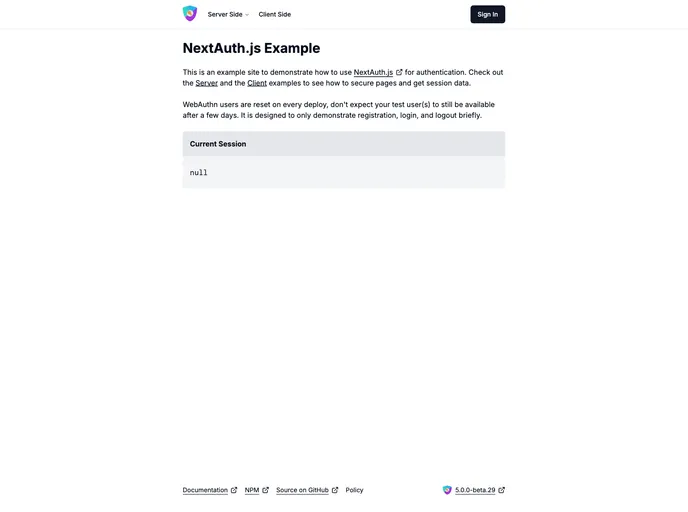
Example showing how to use NextAuth.js with Next.js
NextAuth.js offers a fantastic open-source solution for implementing authentication in web applications, particularly for those built with Next.js. This example application serves as a showcase for how to seamlessly integrate NextAuth.js with a basic Next.js app, making it an invaluable resource for developers looking to enhance their authentication processes. Tailored for both client and server environments, this library not only simplifies user sign-in but also supports various authentication providers, ensuring that user experience is both secure and efficient.
With an eye on future expansion, NextAuth.js aims to support additional frameworks beyond Next.js, making it a versatile choice for developers. Even without a database, this library allows for authentication through OAuth, illustrating its flexibility and ease of use.
Open Source: NextAuth.js is fully open-source, giving developers the freedom to customize and extend its functionalities as needed.
Multi-Provider Support: Easily integrate a variety of authentication providers such as Google, Twitter, GitHub, and Email, making it adaptable for different use cases.
Serverless Ready: Designed primarily for Next.js and Serverless environments, ensuring optimal performance and scalability for modern web applications.
Simple Setup: Get started quickly by cloning the repository and configuring your local environment using a straightforward process.
Database Flexibility: While a database is recommended for persisting user accounts, NextAuth.js also supports authentication without one, defaulting to JSON Web Tokens.
Customizable Callbacks: Configure callback URLs for OAuth services efficiently, ensuring smooth user experiences during sign-ins.
Passwordless Sign-In: Option to set up passwordless authentication via email with an SMTP server, catering to diverse security needs.
Production Ready: Comprehensive deployment documentation ensures that developers can easily prepare their application for a live environment.