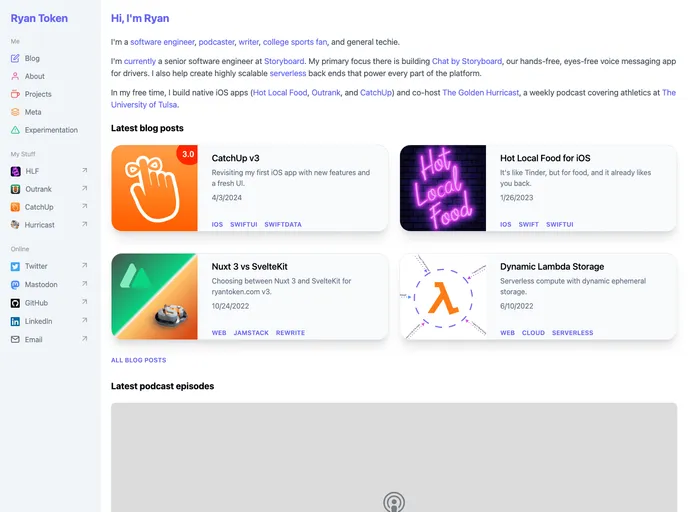
ryantoken.com v3 - written in Svelte, Tailwind, and mdsvex. Replaced by ryantoken.com v4
Overview
ryantoken.com is a Jamstack website created using Svelte, SvelteKit, and Tailwind. It is hosted on the Vercel platform. The blog section of the website is generated using mdsvex and Markdown. Serverless functions and API endpoints are configured using the Serverless Framework.
Features
- Jamstack: The website is built using the Jamstack architecture, which provides better performance, scalability, and security.
- Svelte and SvelteKit: Svelte and SvelteKit are used to develop the website, providing a modern and efficient framework for building interactive web applications.
- Tailwind: The Tailwind CSS framework is utilized for styling the website, offering a highly customizable and responsive design.
- Vercel Hosting: The website is hosted on the Vercel platform, which allows for easy deployment, scaling, and management of the application.
- mdsvex and Markdown: The blog section is generated using mdsvex, a Markdown preprocessor for Svelte, enabling the author to write content in Markdown format.
- Serverless Functions: The website utilizes serverless functions and API endpoints, which are configured using the Serverless Framework, allowing for efficient and scalable backend functionality.
Installation
To install the ryantoken.com theme, follow these steps:
- Install Svelte and SvelteKit globally:
npm install -g svelte@sveltekit/cli
- Clone the repository:
git clone https://github.com/username/ryantoken.com.git
- Navigate to the project directory:
- Install the project dependencies:
- Start the development server:
- Access the website locally at http://localhost:5000.
Summary
ryantoken.com is a Jamstack website built using Svelte, SvelteKit, and Tailwind. It is hosted on the Vercel platform and utilizes mdsvex and Markdown for the blog section. The Serverless Framework is employed to configure serverless functions and API endpoints. This combination of technologies allows for efficient development, scalability, and performance of the website.